Follow a taste message from food to your brain. Discover how growing and new food experiences can change which flavors you enjoy, with simple food tips and a quiz.
Why might I enjoy a food more when I am older, even if the food has not changed?
About this episode
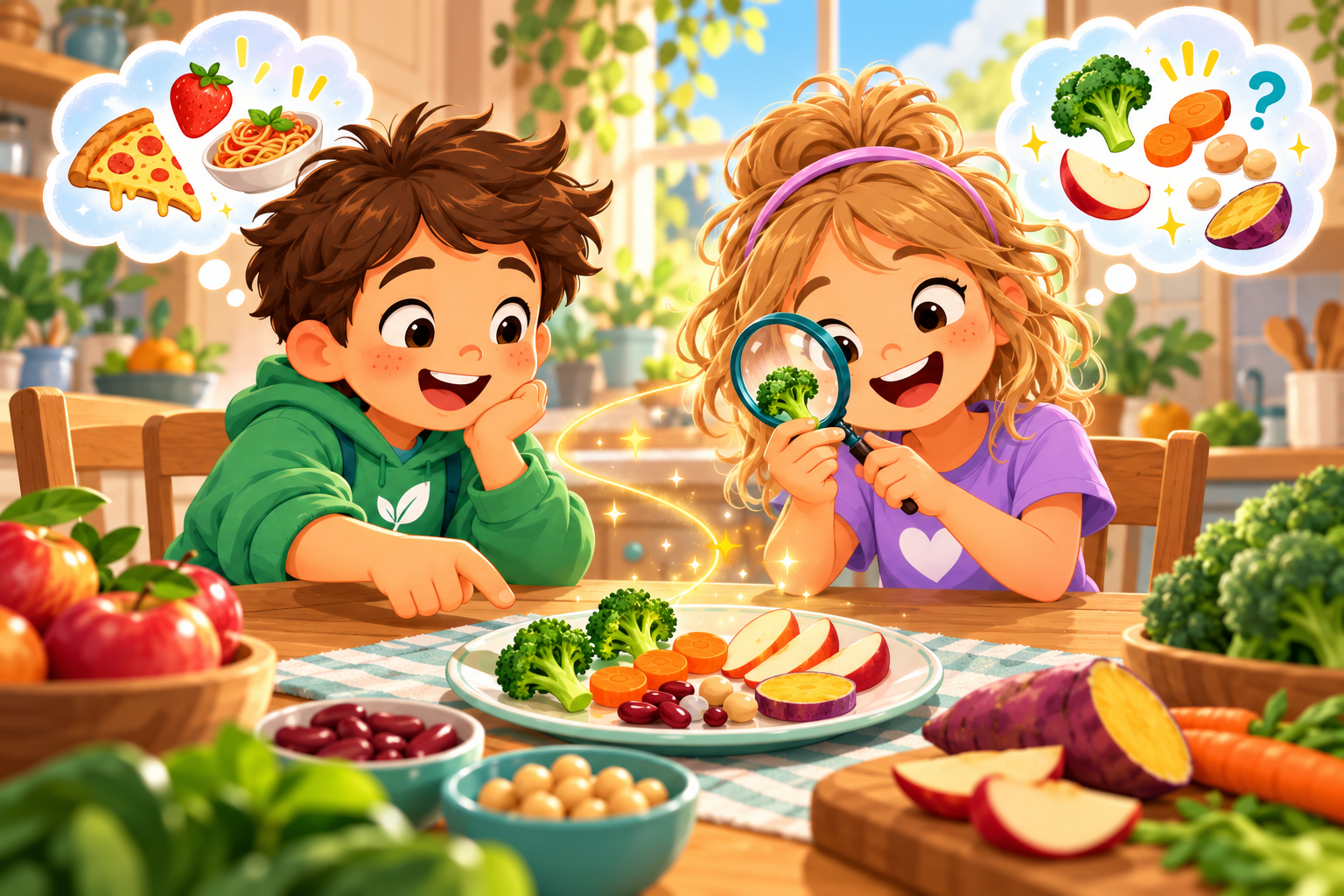
Why might you like a food now that you did not enjoy when you were younger? This Healthy Kids Daily episode follows one simple path: food, taste buds, brain. Tara explains the difference between noticing a flavor and liking it, using broccoli as a familiar example.
Kids ages 4–10 discover how growing and new food experiences can change the way a flavor feels. The episode also introduces zinc, a nutrient that helps the sense of taste work normally, and gentle ways to explore foods with parents. This whole-body approach connects sensory learning and nutrition without pressure to take a certain number of bites. Try four recap questions, then explore the free taste-bud activity pack and referenced parent guide.
Inside this adventure
Food, taste buds, brain
Follow a taste message and learn why detecting a flavor and enjoying it are different jobs.
Why a favorite food can change
Discover how your brain learns from new food experiences and how some tastes can feel different as you grow.
Food helpers and gentle exploring
Meet zinc in foods such as beef and beans, and find ways to get to know foods without pressure.
Your four-question recap
Explain where taste messages go, how your brain learns, why preferences change and one food that provides zinc.
Go at your own pace. You can answer out loud, think quietly, skip a question, or explore with a parent. Every kind of curious is welcome.
LET'S WONDER TOGETHER
What did you discover?
Have a guess. This is about exploring, not getting a perfect score.
A STORY TO EXPLORE TOGETHER
The episode transcript
Why does my taste change as I get older?
Hi, I'm Tara. I'm glad you're here. Welcome to Healthy Kids Daily.
Maybe there's a food you didn't like before, but now you do. How can that happen? Did the food change? Or did something change in you?
Let's follow a bite of food and find out. We'll use broccoli as our example. You don't need any broccoli with you. We're just imagining it.
First, how do you taste that bite?
Your mouth has tiny taste buds. They have special parts that notice tastes in food. They work like tiny taste detectors.
When food reaches them, they help send a message to your brain. Your brain uses that message to recognize the taste. So the path we're following is food, taste buds, brain.
Now imagine that bite of broccoli has a bitter taste. Bitter is a kind of taste you might notice in some green vegetables or very dark chocolate. Your taste buds help send the message, and your brain notices the bitterness.
But noticing a taste and liking it are two different things. You can notice a taste without enjoying it. Your taste buds help detect it; your brain is involved in whether you like it.
That's our first important clue. Liking food is a brain job, too!
So what can change as you get older? Let's stay with the same broccoli.
Imagine a child trying it for the first time. The flavor is new. The child notices the bitterness and thinks, Hmm. I don't like this.
That first taste gives the brain an experience to remember. Later, if the child chooses to taste broccoli again, the brain gets another experience. And another time, another one.
The brain can learn from those new experiences. The flavor becomes something it knows. Over time, it can learn to enjoy a flavor it didn't enjoy before.
The broccoli hasn't turned into ice cream. It's still broccoli! What changed is the brain's reaction to it. A first bite doesn't have to be a forever decision.
As you get older, you've had more time to have experiences like that. Learning about foods can change which ones you enjoy.
Quick thinking question. In our example, what got new experiences: the broccoli, or the child's brain?
The child's brain. That's how learning about a food can change how much you like it.
There's another part to growing up. Some bitter tastes can be easier for children to notice than for grownups. A small amount may be noticeable to a child but not to an adult.
As some people get older, they don't notice certain bitter tastes as easily. The same food may then seem less bitter.
Scientists are still working out exactly why that growing-up change happens. We do know it doesn't happen the same way for everyone.
Now we can put the clues together. The way you notice a bitter taste can change. And your brain can learn to enjoy a flavor through new experiences.
So the same food can get a different reaction from you later. It isn't just the food that matters. The person tasting it matters, too.
Now it's time for our Health Helpers: ways to look after the body part we're learning about.
First, your body needs a nutrient called zinc for your sense of taste to work normally. A nutrient is something in food your body needs. Beef and beans are two foods that provide zinc.
Zinc helps your taste system work. It doesn't choose your favorite dinner for you.
Second, get to know foods with your grownup. You could help wash a vegetable or put cooked beans in a bowl. If you'd like to taste a safe food, trying it on different days gives your brain more experiences with that flavor. There's no required number of bites.
Different foods give your body different nutrients. Exploring foods over time can help you find more ways to get those helpers.
Let's see what we remember.
Question one. When your taste buds notice something in food, which part of your body gets the taste message?
Your brain. Taste buds help send the message, and your brain recognizes the taste.
Question two. Pick one. Is the brain stuck with its first reaction to a food forever? Or can it learn from more experiences?
It can learn from more experiences. That can change how much you enjoy a flavor.
Question three. Here's our big question. Why might you enjoy a food more when you're older, even if the food hasn't changed? Think of one reason.
One reason is that your brain has had more chances to learn about that flavor. Another is that some bitter tastes may seem less strong as you grow. Either can help change the experience.
Last question. Can you name one food that gives your body zinc?
Beef or beans are two examples. Zinc helps your sense of taste work normally.
Here's the answer to our big question. Food sends taste messages to your brain. As you grow, the way you notice some tastes can change, and your brain learns from more food experiences. That's why a food you didn't like before can become one you enjoy.
Grownups, find our activities, parent guide and written references at healthykidsdaily.com. That's Healthy Kids Daily dot com.
Thanks for figuring this out with me. Healthier kids, happier tomorrows. A podcast from My Health Optimized.
FOR PARENTS
A little more to explore.
Our approach connects everyday habits with the ways our brains and bodies work. These references support the educational concepts in this episode.
From the My Health Optimized functional medicine library: Finally Focused; The Pegan Diet.
Use the parent guide for conversation starters and ideas you can adapt to your family. Individual questions about your child's health belong with a qualified professional who knows them.
Not medical advice. Healthy Kids Daily is a wellness and education resource from My Health Optimized. Its content does not diagnose, treat, or prescribe. My Health Optimized’s coaches are not a substitute for a licensed clinician. Always consult a qualified healthcare professional about your or your child’s health.